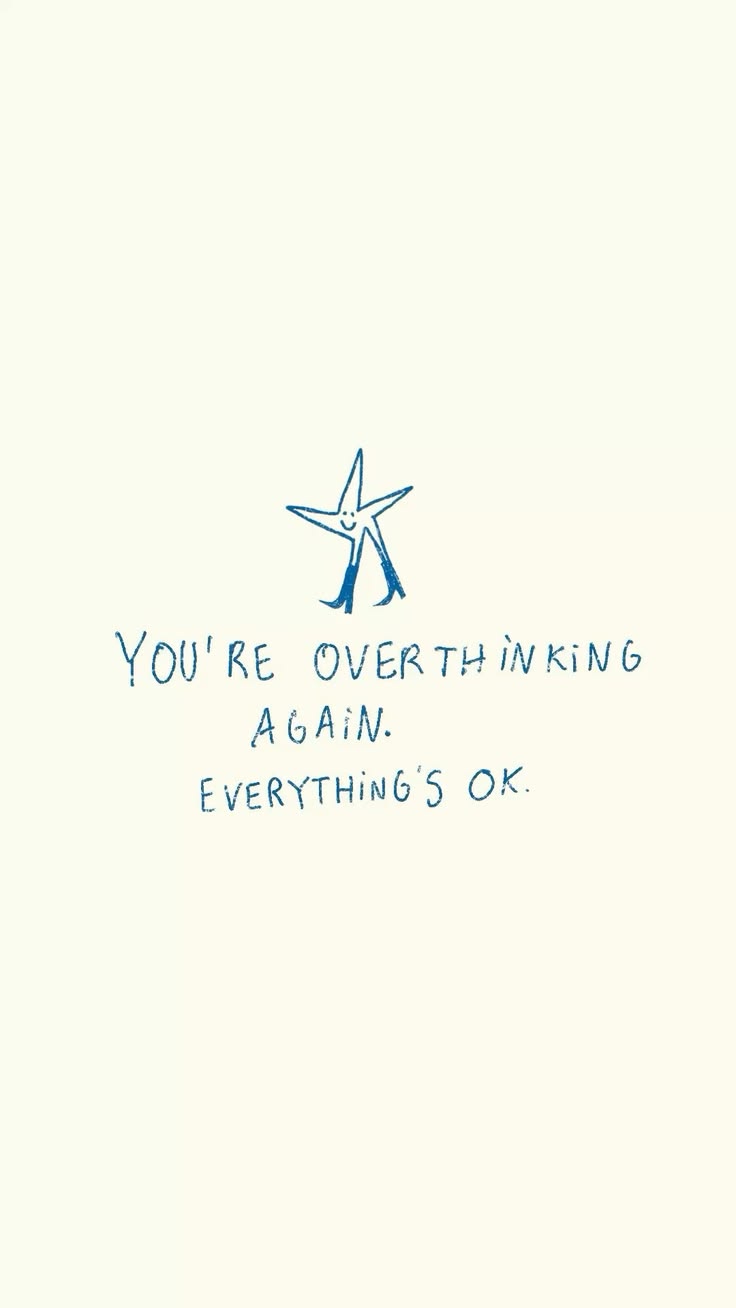
We spend so much of our lives learning how to be there for other people. We learn how to be the friend who answers the phone, who gives the pep talk, who reminds someone of all the things they’re forgetting about themselves when they’re having a bad day. We tell the people we love that one mistake doesn’t define them, that they deserve rest, that they’re being way too hard on themselves. We celebrate their wins, sit with them through their losses, and somehow always seem to find the right words when they can’t find them for themselves. But when it comes to the person staring back at us in the mirror, suddenly we are not nearly as generous. We hold ourselves to different standards. We replay the same mistake, pick apart the picture, compare ourselves to everyone around us, and say things in our own heads that we would never dream of saying out loud to someone we love. And maybe that’s worth paying attention to. Because as important as it is to have good people in your corner, there is only one person who is going to be there for every single second of your life. So maybe we should learn how to be someone we’d actually want in our corner.
Get comfortable and stay with me for a while. More importantly, let your guard down a little and give yourself permission to actually hear these words without immediately thinking of all the reasons they don’t apply to you. I have a feeling a few of us could use the reminder.
Would You Ever Say That to Her?
Think about the last time one of your friends or family came to you upset about something. Maybe they didn’t get the grade they wanted, didn’t get the job, hated how they looked in a picture, or just felt like everyone around them was somehow doing life a little better than they were. Chances are, you didn’t respond by confirming every terrible thing they were already thinking about themselves. You didn’t tell them, “Yeah, you probably should be embarrassed,” or “Honestly, everyone else does seem to have it together more than you.” You reminded them of the things they couldn’t see in that moment. You gave them perspective and probably said they were being way too hard on themselves.
And the funny thing is, we can be so good at doing this for other people. I can give my friends a pep talk like it is quite literally my full-time job. I can find a silver lining, rationalize a mistake, remind them of everything they’ve accomplished, and come up with seventeen reasons why the thing they’re currently spiraling over is absolutely not the end of the world. But when I’m the one spiraling? Apparently, all of that wisdom leaves my body. One mistake becomes evidence that I’m not good enough. One bad day turns into I need to get my entire life together. We take these little moments and turn them into sweeping conclusions about ourselves in a way we would never allow someone we love to do.
And I think that’s the part that gets me: if my best friends said some of the things about themselves that I have said about myself in my own head, I would be heartbroken that they saw themselves that way. I would want to shake them and make them see what I see. I would remind them that they are so much more than the thing they are currently using to measure themselves. Yet somehow, when it is our own reflection, our own mistake, or our own insecurity, that same compassion becomes much harder to access.
Maybe we’ve gotten so used to our inner voice that we don’t even notice how harsh it can be. We call it being realistic. We call it holding ourselves accountable. Sometimes we even convince ourselves that being our own toughest critic is a good thing; that if we stop pushing, criticizing, comparing, or finding the next thing to improve, we will become complacent. But before we accept that voice as the truth, I think there is a question worth asking: If someone we loved talked about themselves the way you sometimes talk to yourself, what would you say to them?
So… Why Are We So Mean to Ourselves?
As it turns out, we might be fighting at least a little bit of an uphill battle here. Psychologists have studied something called the negativity bias, which is basically our tendency to give negative information more weight than positive information. From an evolutionary standpoint, that actually makes sense. Remembering the thing that could hurt you was probably a little more important for survival than remembering the thing that made you feel good. The problem is that my brain is no longer just trying to keep me from getting eaten alive by a wild animal. Now it can use that same impressive ability to fixate on the one awkward thing I said three days ago (isn’t that great).
Think about how easily we do this. Ten people can compliment you, but somehow the one slightly critical comment is the one you think about on the drive home. You can accomplish nine things on your to-do list and spend the night annoyed about the one you didn’t finish. You can have an otherwise great day and still lie in bed thinking about the one thing you wish you had done differently. Our brains are remarkably good at finding what went wrong, and sometimes remarkably bad at giving equal airtime to everything that went right.
But I also think there’s another piece of this, especially for those of us who are ambitious, competitive, or maybe just a tiny bit perfectionist. We convince ourselves that the criticism is what keeps up motivated. If I let myself be satisfied, maybe I’ll stop working so hard. If I give myself grace after failing, maybe I’m making excuses.
Except there’s a difference between having high standards for yourself and constantly feeling like you are falling short of them. Wanting more for yourself doesn’t require hating where you are now. And maybe the voice telling you that you’re not doing enough isn’t actually the reason you’ve gotten this far. Maybe you got here because you care, because you work hard, because you’re resilient, because you keep showing up. Maybe being cruel to yourself was never the secret ingredient after all.
Being in Your Corner Doesn’t Mean Always Taking Your Side
I think one of the reasons being kinder to ourselves can feel uncomfortable is because we confuse kindness with letting ourselves off the hook. But there’s a difference between holding yourself accountable and holding yourself to a standard that requires you to be perfect; and then tearing yourself apart every time you inevitably fall short. Especially when, half the time, you’re the only person who set that impossible standard in the first place.
I see this all the time in medical school, and I am definitely not immune to it. You can watch someone understand a concept immediately that you haven’t quite wrapped your head around yet, and somehow your brain makes the completely rational leap from they understood that before me to should I even be in medical school? Studying for boards and now shelf exams has only made me more aware of it. So much of learning medicine involves getting things wrong. We learn from missed questions, things our attendings correct us on, and moments when we realize how much we still don’t know. Logically, I know that’s the entire point of being a student. But when you genuinely want to be the best version of yourself you can be, it can be hard to constantly be reminded of what you haven’t mastered yet.
And this isn’t unique to medical school. Most of us exist in environments where doing something right every day quietly becomes expected, while the mistake is what gets noticed. Eventually, we start doing the same thing to ourselves; overlooking everything we constantly do well and putting a magnifying glass over the places where we fall short.
Being in your own corner doesn’t mean blindly taking your side. A good friend will hype you up endlessly, but she’ll also be the first to say, “Okay, I love you, but you were definitely wrong there.” We should be able to do the same for ourselves. There’s a huge difference between “I did something I’m not proud of” and “I’m a bad person”. Between “I could have prepared better” and “I’m not smart enough”. One gives you somewhere to go. The other just gives you somewhere to stay stuck.
The best people in our corner don’t expect us to be perfect. They remind us who we are when we forget, call us out when we need it, and still stick around afterward. Maybe being there for ourselves means learning to do the same.
You Are Worth Working On
I genuinely believe that you are one of the best things you can invest your time and energy into. Work on yourself. Learn things. Take care of your body. Chase the career you want. Go to therapy. Become a better friend. Break bad habits. Try new things. Figure out what makes you happy. There is something really beautiful about realizing that the person you are today doesn’t have to be the exact same person you are five years from now.
But I also think there’s a trap hidden somewhere in all of that self-improvement. When there is always something to work on, it can start to feel like the version of you that exists right now is perpetually unfinished. Like happiness, confidence, or even being proud of yourself is something you’ll finally earn.
I’ve caught myself doing this with some of the biggest things I’ve worked for. When I got into medical school, it was almost hard to let myself fully be proud of it because, in my head, that was what I was supposed to do. I had talked about becoming a doctor for so long and expected it of myself, so instead of sitting with the accomplishment, part of me was already looking toward the next thing. Sometimes we set the bar so high for ourselves that reaching it doesn’t feel like winning, it just feels like meeting our own expectations.
The problem is, I don’t think any of us ever reach some magical final version of ourselves. There will always be another goal, another lesson, another part of ourselves we want to understand a little better. You can want more for yourself while still being proud of yourself now. You can be a work in progress without treating yourself like a problem that needs to be solved. The best kind of self-improvement doesn’t come from believing you aren’t good enough as you are. It comes from caring about yourself enough to keep growing.
For the Whole Ride
There are going to be so many people who stand in your corner throughout your life. Friends who know exactly what to say, family who believes in you when you don’t, mentors who push you, and people you haven’t even met yet who will become some of the most important parts of your story. Let them be there. Lean on them. Love them hard. I will never be the person who tells you that you should be able to do everything on your own.
But no matter how loved you are, there are parts of your life that only you will experience. You’re the one who hears every thought you never say out loud. You know which failures hurt a little more than you let on and which accomplishments mean more than anyone else could fully understand. You’re there for the ordinary days no one else sees, the nights when everyone has gone home, and the moments when you have to decide what comes next.
So be someone you’d want there with you. Be the person who can say we messed that one up, but we’ll figure it out. Let yourself be disappointed without deciding you’re a disappointment. Push yourself when you know you have more to give but know when you need a little grace too. And when something good happens, please let yourself be proud of it before you start chasing whatever comes next.
You don’t have to love every part of yourself every single day. I don’t think that’s realistic. You just have to keep choosing not to abandon yourself on the days when loving yourself feels a little harder. Because if you’re going to be the one person who is there for the whole thing, you deserve to make yourself someone you’re glad to have along for the ride.
I’m still learning how to do all of this, too. I think most of us are. So, on the days when that voice in your head gets a little too loud, I hope you remember to give yourself some kindness you so easily give to everyone else. I’m rooting for you, and while you’re at it, don’t forget to root for yourself too.
Thanks for keeping up with Kay.









Leave a Reply