
When Life Shifts, So Does Identity
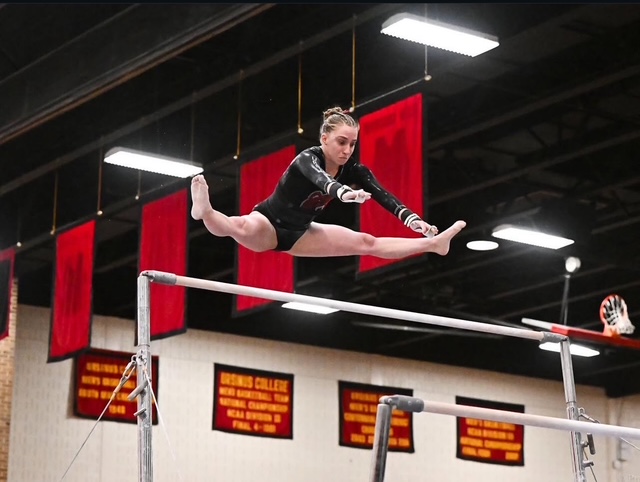
Gymnastics wasn’t just a sport to me; it was a part of my everyday life, my passion, my first love. From the time I was four until I was twenty-two, the highlight of my day was walking into practice. I tied so much of my self-worth to being a gymnast, and for nearly two decades, it gave me consistency, community, and something I was proud to call mine. Then almost overnight, it was gone. I went from training twenty hours a week doing something that filled me with so much joy to zero. When I graduated from college and had to leave behind the sport that shaped me as a person, it broke me. I was left questioning who I was without gymnastics, and whether I could still be “something” if I wasn’t a gymnast anymore.
And while my story is about gymnastics, identity shifts like this show up everywhere. Maybe for you it was graduating school, stepping away from a career, moving to a new city, or closing the chapter on a long relationship. Anytime we step out of a role that once defined us, it can feel like the ground shifts under our feet. The routines, titles, and communities we used to anchor ourselves to are suddenly gone; it is the unsettling feeling of not quite recognizing yourself anymore. It’s disorienting, it’s uncomfortable, and it’s something so many of us go through, yet rarely talked about.
The Quiet Grief of Letting Go
The identity loss that comes with being done with a sport so integral to your life really does feel like grief. People who haven’t experienced it might say things like “Well, you knew you weren’t going to be a gymnast forever,” as if that somehow makes it easier. But no amount of knowing could have prepared me for the sadness and emptiness I felt when it was suddenly over. Even now, more than three years out, I still catch myself feeling waves of sadness and nostalgia for the routines, teammates, and the version of myself that existed in that world. Gymnastics wasn’t just what I did, it was who I was.
And I know I’m not the only one. For so many college athletes, the end of their sport comes with an identity crisis no one really talks about. During college, there is an abundance of mental health resources and communities dedicated to athlete well-being, like The Hidden Opponent, Morgan’s Message, and Athlete Ally. But once you graduate, the safety net disappears, and the transition hits with full force. The structure, support, and identity that sports provided are suddenly gone, and athletes are left to navigate that loss largely on their own. It is an invisible kind of grief, and one that deserves far more recognition and care than it gets.
Redefining Success
Throughout my life, there were really only two things I measured my self-worth by: academics and gymnastics. Especially during meet season, when there was at least one a weekend, my perfectionist side was at 100%. With only those two pillars defining me, a bad practice or rough meet didn’t just feel like a setback, it felt like I was failing at life altogether. In college, I tried not to obsess over stats or scores since gymnastics can be so subjective, but even then, it was hard not to let those numbers sneak in as a measure of my progress, and, by extension, my value. After graduation, I also found myself struggling with motivation to workout. For so long, training had been about getting better at gymnastics, and without that goal it felt directionless. But over time, I started redefining what success looked like for me. Now it is less about scores or perfection and more about how I feel mentally and physically, the progress I make in the gym, and the relationships I nurture with family and friends. I work out to support my overall health, my longevity, and my future goals of becoming a surgeon, where strength will matter. Plus, I love being the person people ask to move the heavy furniture.
For college athletes, success used to be easy to measure. It showed up in stats, scores, medals, or how you stacked up to the competition. When that structure disappears after graduation, it’s no surprise so many of us struggle with motivation. But life after sport gives you the chance to redefine success on your own terms. Maybe it’s lifting because it makes you feel strong, running because it clears your head, or staying active simply because you enjoy it. Success can also be outside of fitness altogether. Like how you show up for friends and family, how you care for your mental health, or how you build consistency in a new routine. Redefining success means realizing it’s not about chasing perfection anymore, it is about building a life that feels good to live in.
Who You Are Outside the Labels
I was scared to accept that I wasn’t a gymnast anymore, and even more scared of the thought of never doing it again. Gymnastics had been my identity and the thing that nearly filled all of my free time; it was my only hobby, my social circle, my structure. So, when it was gone, I had to rediscover who I was without it. That is when I started leaning into other parts of myself: cooking, making music, finding new trails to walk, and trying fun ways to be active. At first, it felt foreign, almost like I was faking it, but slowly those things became a part of me too.
When your schedule, friendships, and sense of worth have been tied to one role for so long, stepping away feels like losing a piece of yourself. But what’s really happening is an expansion; outside of the labels, there’s room to explore who you are in different contexts. Whether it’s discovering new passions, building a career, or simply enjoying the freedom of time, it creates a space to find out who you are becoming.
The Ongoing Journey
I’ll never again get to experience the thrill of wearing a leotard, sticking my last pass on floor, and jumping up and down with my teammates in pure excitement. That thought will probably always make a little sad. But now, I can look back with gratitude, knowing how lucky I was to find something I loved for so long. Gymnastics taught me discipline, time management (a skill that has been lifesaving in medical school), and even gave me a competitive edge that, while sometimes too strong, now makes me a fierce pickleball opponent. It also gave me relationships I’ll carry forever: coaches who have known me since I was four are now mentors and friends, teammates who became sisters, and a community that still feels like home every time I step back into my childhood gym.
I know every athlete has their version of this. The loss of a sport leaves a gap, but it also leaves behind invaluable lessons and lifelong bonds. Whether it’s the discipline of early mornings, the camaraderie of shared victories and losses, or the resilience learned from pushing past limits, these experiences never truly leave us. The jerseys and routines may stay in the past, but the skills, friendships, and identity we built through sport become part of who we are moving forward. That is the ongoing journey. Learning that while the role of “athlete” changes, it never really disappears.
The Other Side
Gymnastics has always been a huge part of my life, but I also know I’m not the only one who’s felt the identity shift that comes when the sport ends. To bring in more perspectives, I reached out to three women who have been a big part of my own journey: Abby and Alyssa, my teammates from Ursinus, and Nina, who coached me for more than a decade and inspired me long before college. Each of them is at a different stage since leaving competitive gymnastics – Abby graduated in 2022, Alyssa in 2023, and Nina in 2010 – and they have all taken different paths since. Their stories show that while the transition looks different for everyone, the feelings of identity, loss, and growth are experiences we share.
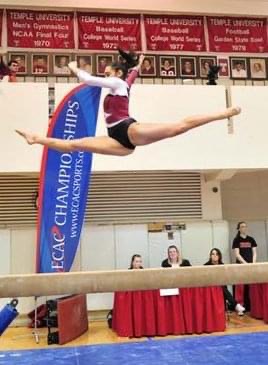
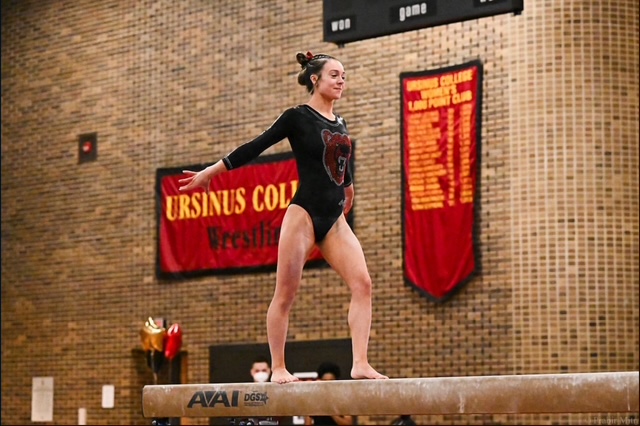
What was the hardest part about leaving your sport behind, and how did it impact how you saw yourself?
Alyssa: “I think the hardest part of leaving gymnastics behind was that I truly couldn’t remember a life without gymnastics in it. I started the sport when I was 4-5 years old and I did it for 18 years…that is a huge part of your identity to leave behind. For the longest time, gymnastics and school were the two constants in my life, and when I graduated college, both of those elements changed, and I had to figure out who I was outside of those two identifiers. “
“Thankfully, I never felt like gymnastics was the most important part of my life, and I have always had a variety of other interests, but gymnastics was still a focal point for everything else. I wouldn’t necessarily say that retiring from sport changed how I saw myself as a person, as I’ve always seen gymnastics as only an element of my life, but I do still miss it. There’s something incredibly cool about being able to do skills that most people never even dream off…it gives you such an appreciation for your body, its strength, and its capabilities, and that is something I really miss. I sometimes look back at videos and cannot believe that it was me only a few years ago … although I still love to occasionally flip, I cannot imagine doing what I once could (for better or worse; I think my body appreciates not doing a death-defying sport anymore).”
Abby: “I feel like personally the hardest part for me was knowing that I will never do what made me the happiest throughout my life to that point ever again and accepting that I likely wouldn’t find anything that would give me the same level of fulfillment. Gymnastics was where I could forget all other life stressors and knowing I was losing that outlet was really hard for me as well. It felt like I was unwillingly giving up a part of myself and that was challenging for me to navigate.”
Nina: “The hardest part about leaving your sport behind is accepting that you did all you could and got out every opportunity you wanted from it. You can’t live with regret, you can’t go back, and in gymnastics you really do have a shelf life. I was fortunate enough to finish out my 4 years on a collegiate team, making line-ups, and keeping myself healthy. When the time came and my final routines were performed, that is the moment when it really hits you, what’s next? For me, I have always been in or around gymnastics, since I was born. So, after graduation and feeling that “freedom”, possibilities are endless, no practice, but who am I? I dabbled in marketing and went on a few job interviews, to which almost all my answers led back to me as a gymnast, the lessons I learned, the discipline, my time management, etc. I was hired and very quickly realized I am not a desk job person, and I need to be more mobile and felt like a piece of me was missing. I missed that excitement and adrenaline of being an athlete, those game day decisions, that feeling of accomplishment after a hit routine. You can find some of these things in everyday life but it’s not the same. I have always coached, in some aspect, classes, teams, and camps, even at a young age, and I had a great coaching position come to me, and I jumped back in!”
How did you cope with the transition out of being a student athlete, and what has helped you the most?
Alyssa: “So, I’m not saying that I necessarily recommend this, but I immediately jumped into a bunch of other things after graduating school and retiring from gymnastics. I started a full-time job and started working as a volunteer gymnastics coach (at Ursinus), so I didn’t fully leave the sport behind initially. Around this time, I also read the stat that less than 1% of the world’s population will run a marathon in their lifetime, and I took that as a dare/new challenge for myself, completing one the following year (important note: I previously HATED running).”
“Since then, I have tried a bunch of other athletics avenues, from cardio dance to swimming to rock climbing to cycling to my personal favorite, circus skills and flying trapeze. I love trying new ways to get in exercise and I am so grateful for the fundamental strength and confidence that I developed in gymnastics, because it has given me the ability to explore so many other activities. I think being able to appreciate the world outside of gymnastics and try all these new things has really helped me through my transition out of the sport. Gymnastics is such an all-encompassing sport that it doesn’t leave much time (or energy) for other physical activities, so I have loved getting to explore all these other options after retirement!”
Abby: “Transitioning out of being a student athlete was difficult for sure. I knew I wanted to continue being active and I felt this was my time to try new things, so I played in a rec soccer league with my high school friends, I tried running, Pilates, yoga, and I finally found CrossFit this past year. I can honestly say I feel the best physically I ever have since being a gymnast (also without the pain which is an added bonus). I think finding something challenging and enjoyable has helped me the most and surrounding myself with people who wanted to do the same gave me a sense of community like I had with my teammates.”
Nina: “Transitioning back into coaching felt like it gave me a purpose and re-energized me. I came from an era of gymnastics where the gymnast wasn’t always the priority, mental health wasn’t really a thing, it was just gymnastics, and you were a robot. I had so many wonderful experiences and coaches, but then I also have things that I still live with and affect me day to day. I wanted to help the next generation not have to deal with similar things and if you can be a part of someone’s journey and growth (even a small part), that is rewarding and that is all I ever want. Coaching helps fill that spot where the athlete used to be, but also much more because you’re able to hopefully use what you needed when you were younger or give them your confidence when they might not have enough of their own. Meets are still exciting, and planning practices feels familiar, but now I better understand the athletes’ perspectives. I am sympathetic when they are tired, stressed, annoyed, etc. I use my past experience to coach not only the sport, but also the person. Because even though we don’t want to believe it, gymnastics will end, but the character, work ethic, personality, etc. will continue, and you want that strong foundation for life.”
How have you been able to redefine success or build an identity outside of athletics?
Alyssa: “Despite having a relatively successful athletic career, I never defined my personal success as relating to my accomplishments in athletics, so thankfully, I did not struggle with this transition. I’ve always had a relatively unusual outlook on gymnastics; I love the sport for what it is, for the skills, strength, and mental battles that you have to overcome, but I’ve never cared about the scoring side of it. In my mind, gymnastics is such a subjective sport, that you can’t put your worth on the numbers, and that has served me well in retirement. As a whole, I try to focus on the type of person that I want to be and the impact that I want to have, instead of focusing on an external definition of success. I don’t think that a person should ever define themselves by one element, we are all compilations of so many pieces that are important to who we are. Retiring from athletics didn’t change who I was, but it did allow me to grow as a person, prompting me to try new experiences and adventures.”
Abby: “I’m still struggling with this one even 3 years later. I feel like my entire identity was within my abilities to perform as a gymnast and I really saw that as my only defining success. I have really been trying to recognize small wins in everyday life whether that be at work when I learn a new skill, getting another step closer toward my goal of getting into PA school, cooking a meal on my own that actually tastes good, or getting a PR at CrossFit. There’s more to life than gymnastics and I’m still learning new things about myself without it.”
Nina: “Redefining success in and out of the gym. As a coach, you want to see all your athletes succeed, and it’s hard because gymnastics is such a judgmental and subjective sport at times and you can do everything right and still not be rewarded. I try to remind our athletes that scores don’t matter, medals are nice, but if you gave your all and left it all out on the competition floor, that’s all I care about! Going big is always better, even if the result may not be the one you wanted, but you went for it. Succes is defined in so many ways: it could be a kid overcoming a fear, making a big decision, knowing when you need to rest, winning… For me success is seeing our athletes reach their potential, not just in gymnastics but in life. I still have athletes that contact me and fill me in on life and how they are doing, that is he most rewarding thing in the world!”
If there’s one thing I’ve learned through all of this, it’s that losing a sport doesn’t mean losing yourself. It just means learning how to meet new versions of you, ones that exist outside the scores and routines. The transition isn’t easy, and some days it still stings, but it’s also proof of growth. The discipline, strength, and passion that made you an athlete don’t disappear when the season ends; they just show up in new ways. Whether you’re figuring it out in real time or years removed from the sport, you’re not alone in it. We’re all just learning how to carry what we loved into what comes next, and that’s something worth being proud of.
Thanks for keeping up with Kay.






 Keeping up with Kay
Leave a reply to Sabrina Tusavitz Cancel reply