
Back-to-school season isn’t just about fresh notebooks and new pens; it’s the perfect time to hit reset and get your life together (or at least try to). Between classes, schedules, and all the little things in between, it’s easy to feel like you’re already behind before the year even starts. Here are some simple, realistic ways to start strong and actually stay on track this semester.
Set Your Space
Having a space to do work that makes you comfortable and happy is super important, and honestly, it’s fun to set up! It doesn’t have to be anything extravagant; sometimes it’s as simple as a photo of your pet on the desk, a small plant to brighten the room, or a few knickknacks that make you smile. Anything that makes the space feel a little more like you is worth the investment. Let’s face it, whether you’re watching lectures, writing lesson plans, or mapping out your schedule for the week, school can be stressful. But when you can glance over at that picture of your dog or your favorite souvenir from a trip, it lightens the mood. For me, studying feels a little less intimidating when I’m surrounded by cozy touches: my plants, an adorable calendar, souvenir from my favorite places, a picture of Bailey, and yes, some small pieces of medical decor (typical med student, I know).
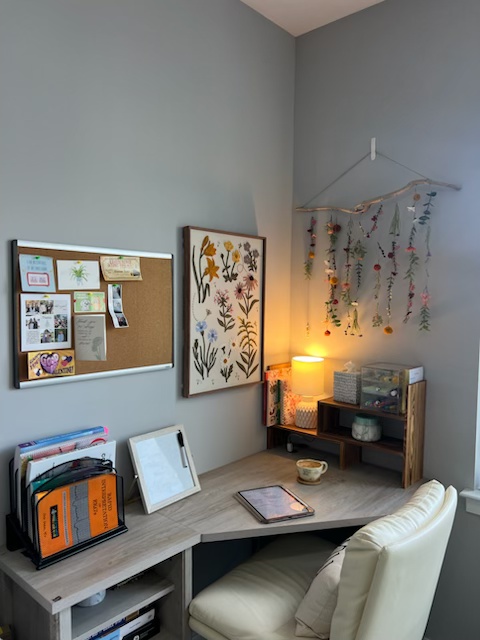
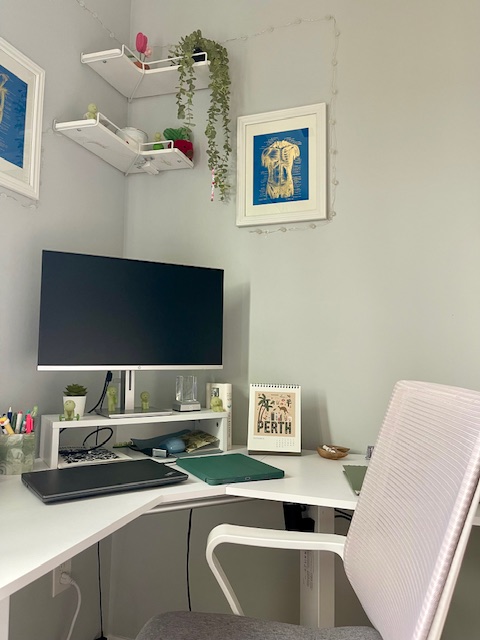
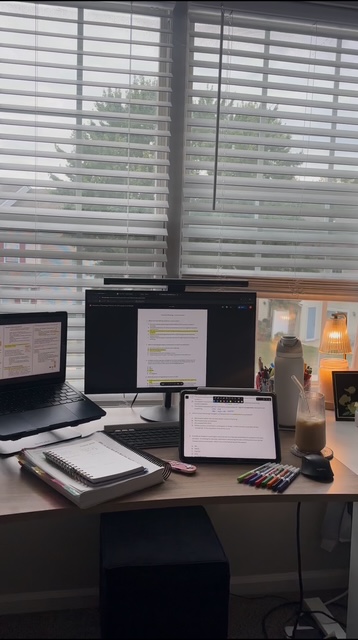
Creating a workspace you actually enjoy spending time in can also help you stay more consistent. If your study area feels inviting instead of overwhelming, you’ll be less tempted to procrastinate or migrate to your bed with your laptop (we’ve all been there). Think about the details that set the tone for you: warm lighting, a favorite mug for your coffee, a playlist that helps you focus, or even a comfortable chair that saves your back during long study sessions. The goal is to create a space that feels supportive, so when you sit down, you feel ready, not resistant, to get started.
Plan with Purpose
The more consistent and intentional you are at the beginning of the year or semester, the more naturally a routine will fall into place. But just because something becomes routine doesn’t mean it has to feel boring or mundane. I like to use two systems of organization: one electronic and one on paper. For my digital setup, I’m a big fan of Google Calendar because it’s easy to categorize events and – my favorite part – you can customize it. I’ll admit, I spend way too much time coming up with seasonal color palettes (right now it’s autumn reds, oranges, and yellows). Does making my Google Calendar aesthetic boost my productivity? Probably not. But it makes the process more enjoyable, and that little spark of joy helps me stick with it. On the paper side, I keep a planner that mirrors my digital calendar but also holds daily to-do lists. I organize it so that every task has its place, and yes, the planner itself has to be cute.
Beyond making planning enjoyable, a few simple strategies can make it more effective. At the start of each week, I schedule a “reset” session to map out deadlines, assignments, and priorities. I break big projects into smaller, manageable steps so I’m not staring down an overwhelming task like “study for exam” with no clear direction. I also leave space for flexibility because, at the end of the day, we are human, and it’s tough to stay perfectly regimented all the time. Giving myself breathing room lowers the chance of getting frustrated with myself when things don’t go exactly as planned. I don’t keep a strict, hour-by-hour timeline for my plans because staying connected to family and friends is just as important as schoolwork. Making space for those moments, whether it’s a quick call to my mom or an hour to grab coffee with a friend, keeps me grounded and reminds me I’m not in this alone. It shifts my schedule from feeling like a rigid to-do list into something that actually feels like living. When your schedule works for you instead of against you, staying on track feels a whole lot easier.
Habits for Success
Small, sustainable habits add up to big results. Think of them as your non-negotiables that keep you feeling good, even when school gets hectic.
Prioritize sleep, please please prioritize your sleep. Too often, we treat sleep like an obstacle to productivity instead of the literal necessity it is. Quality rest promotes balanced metabolism, cognitive function, and improved mood, yet it’s usually the first thing to get sacrificed when deadlines pile up. Whether you’re a medical student cramming for an exam or a teacher trying to perfect lesson plans, our sleep unfortunately takes a big hit. I will admit there are times this is necessary to get things done, but do not make it a part of your routine, do not make it into a habit. A lot of us are used to staying up or studying until our bodies physically cannot stay awake anymore but forget what impact that has on our physical and mental health. I love having “wind down” time before going to sleep, I make an effort to not hop from my desk chair into bed. I try and have the last thing I do before bed be something relaxing, something that allows my brain to start going to sleep.
Hydrate first, then caffeinate. I’ll admit I’m often guilty of the reverse — coffee in the morning, water as an afterthought. But pairing the two makes a difference. Something as simple as keeping a water bottle next to your latte can help you hydrate consistently without feeling like it’s another task on your list.
Have the intention of moving daily. It doesn’t have to be a long workout or a trip to the gym; it can be going for a walk in your neighborhood, stretching, or a 15-minute YouTube pilates video in your living room. What matters is consistency and giving your body the chance to do what it does best … move! This can remind you that you’re more than just a brain attached to a laptop or tablet; your body deserves care too.
Protect your downtime. In a world that glorifies productivity, it can feel wrong to block out time to do “nothing”, but those breaks are what makes work sustainable. Taking time to rest, even in small ways, prevents burnout, sharpens focus, and helps you come back with more energy. Protecting downtime can look different for everyone: reading a chapter of a book that has nothing to do with school, watching an episode of your favorite comfort show, or sitting outside with a cup of coffee. Think of it as giving yourself permission to pause, knowing that rest is not wasted time, it’s an investment in your ability to keep going.
Mindset Matters
If there’s one thing I’ve learned, it’s that your mindset can make or break how school feels. We put so much pressure on ourselves to do everything perfectly (trust me I’m a chronic perfectionist), but the truth is that progress is always better than perfection. Setting huge, unrealistic goals might feel motivating in the moment, but they often leave us feeling like we are falling short. Instead, I try to break things down into smaller, doable steps and remind myself that small wins add up. Finished a lecture? Finally crossed that one lingering task off your to-do list? That counts. One step at a time babe, that’s how little wins fuel big results.
Give yourself grace when things don’t go your way. Not every day is going to be wildly productive, and that’s okay; it does not mean you’ve failed, it just means you’re human. On those days, I remind myself that balance includes flexibility. In those times, it is important to be vulnerable and connect with friends, because nothing makes you feel less alone than hearing someone else say, “Girl, me too.”
At the end of the day, a new school year doesn’t mean running yourself into the ground. It’s about small, steady choices that make the chaos feel a little less … chaotic. A cozy space, a plan that actually works for you, and habits that keep you feeling human go a long way. And when things don’t go perfectly (because they don’t), remember, you are not falling behind, you’re just being human. You’re capable, you’re learning, and you’re doing better than you give yourself credit for. So, take a breath, reset, and keep moving forward.
Thanks for keeping up with kay.






 Keeping up with Kay
Leave a reply to Alex Vlahovic Cancel reply